In comparison certain ceramic capacitors can have tolerances of up to 20.
Ceramic capacitor typical tolerance.
Normally the tolerance of a capacitor is given in terms of the percentage tolerance expressed as nn.
Class 1 ceramic capacitors are used where high.
The minimum tolerance for silver mica capacitor values can be as low as 1.
This is much better than practically all other types of capacitors.
Tolerance of a ceramic capacitor.
These capacitor characteristics can always be found in the data sheets that the capacitor manufacturer provides to us so here are just a few of the more important ones.
Code tolerance b 0 1 pf c 0 25 pf d 0 5 pf f 1 g 2 j 5 k 10 m 20 z.
There are two classes of ceramic capacitors available today.
Active 4 years 1 month ago.
Ceramic tube capacitor the typical style of ceramic capacitors in the 1950s and 1970s.
The capacitor as with any other electronic component comes defined by a series of characteristics.
For components used in applications where better tolerances are required there are many with tolerances of 1 and 2 and occasionally better.
Capacitor ratings aren t all that precise but you can at least work out how imprecise the ratings are by deciphering the following letter tolerance codes.
Within the ceramic capacitor family there are many forms of ceramic dielectric that are used.
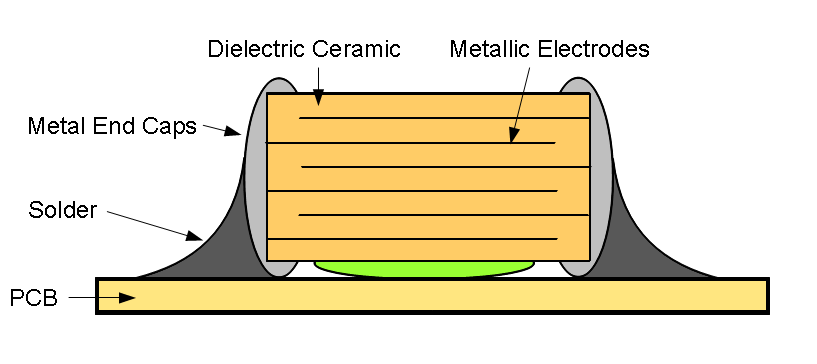
A ceramic capacitor is a fixed value capacitor where the ceramic material acts as the dielectric.
The actual capacitance value must be within the tolerance limits or the capacitor is out of specification.
Class 3 ceramic capacitors are barrier layer capacitors which are not standardized anymore.
They can be substituted with eia class 2 y5u.
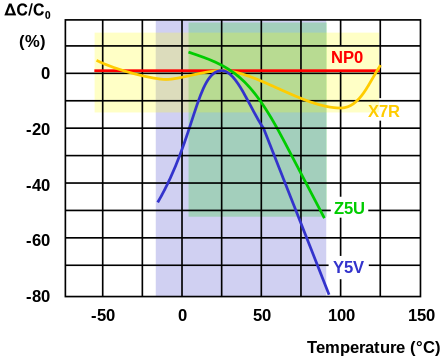
Common types include c0g np0 x7r y5v z5u although there are many more.
Nominal capacitance c the nominal value of the capacitance c of a capacitor is the most important of all capacitor.
Ask question asked 5 years 1 month ago.
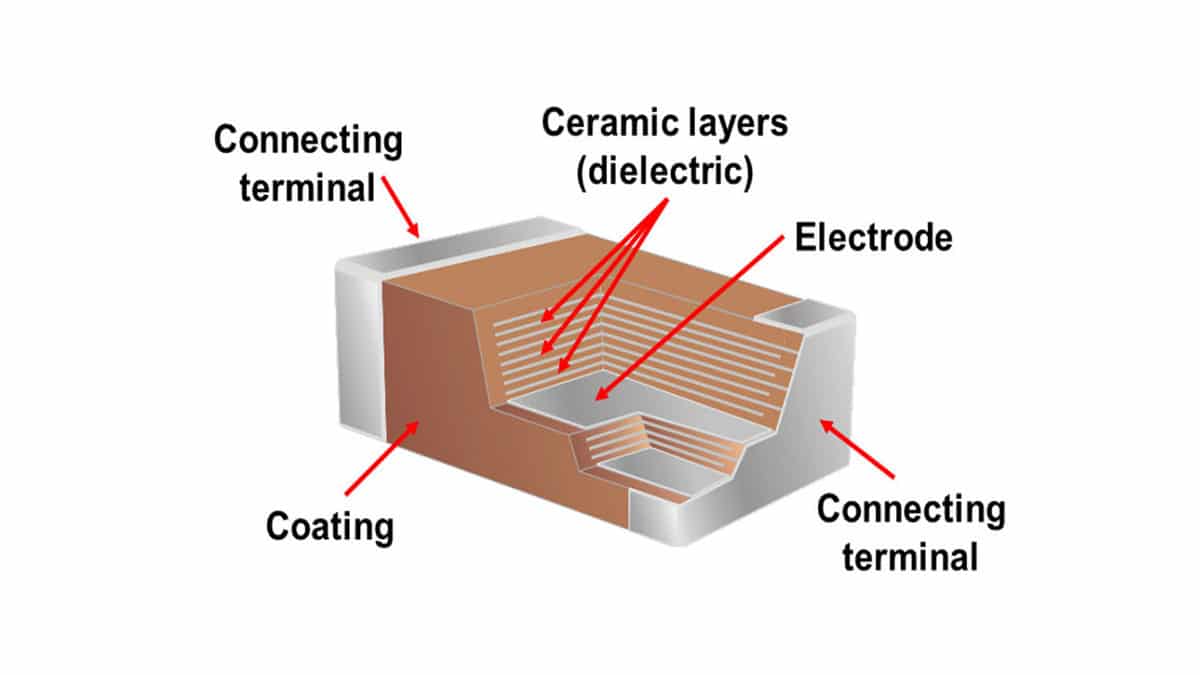
The two most common types are multi layer ceramic capacitors and ceramic disc capacitors.
A ceramic capacitor is a capacitor which uses a ceramic material as the dielectric.
Mica capacitors are very stable and very accurate.
Characteristics precision and tolerances.
Ceramic capacitors have high capacitance values for their size.
They are made in the range of 1pf up to several microfarads µf but do not have the very high capacitance values as electrolytic capacitors.
Class iii or written class 3 ceramic capacitors offer higher volumetric efficiency than eia class ii and typical change of capacitance by 22 to 56 over a lower temperature range of 10 c to 55 c.
The ceramic capacitor gains its name from the fact that it uses ceramic materials for its dielectric.
They are manufactured with a wide range of working voltages and tolerance values.
Their capacitance changes little over time.