Or in the case of hand soldering as you mount one side of the capacitor at a time.
Ceramic capacitor soldered either way.
Select the 22pf capacitors.
Hand soldering differs from reflow soldering in that the soldering process involves localized rapid heating of the desired point.
Are there any points to be aware of when performing manual soldering.
Once you re sure you have c8 correct you can place the remaining 0 1uf ceramic capacitors c2 c3 c5 c6 and c7.
Ceramic capacitors may experience changes to their electrical parameters due to soldering stress.
Flex cracks always always occur after the capacitor has been mounted to the board.
Whereas when the capacitor is non polarized there is terminal involved and therefore can be used in either way.
These cracks occur around the termination area.
They are labeled with 220 insert both of these capacitors solder in place and snip the excess leads.
We need to solder the wire to one end of a ceramic chip cap while the other end is soldered to a pcb land.
Ceramic capacitors are non polar i e they can be connected either way to the motor.
There s no polarity here so it can go in either way.
In severe cases when a large surface mounted capacitor has been subjected to a sudden thermal shock a clearly visible.
Ceramic capacitors faq mounting are there any problems in performing manual soldering of multilayer ceramic capacitors.
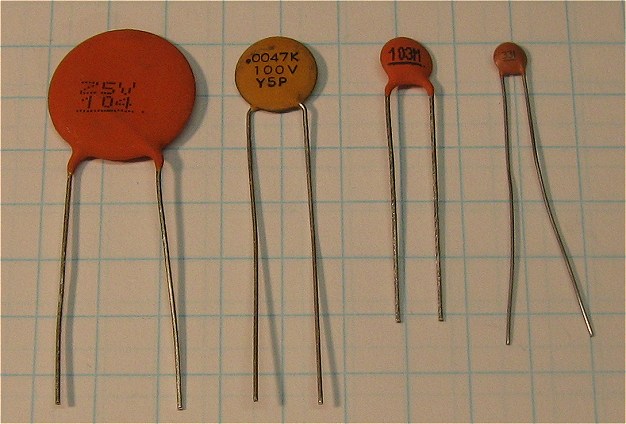
Ceramic capacitors are non polarized and can go in either way.
During this process it is.
Ceramic capacitors are non polarized and can go in either way solder and clip the small capacitor leads.
So you do not need to worry about terminals of the capacitor.
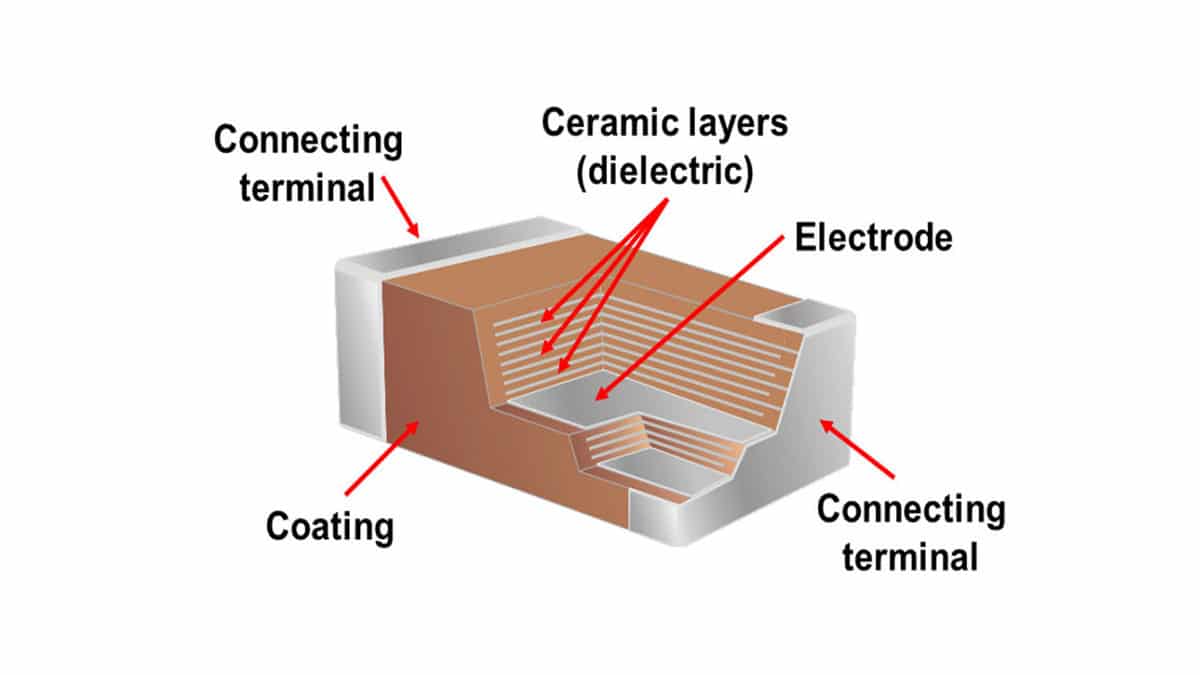
The ceramic capacitor is a non polarity device which is found commonly in every electrical device and the dielectric material that is used in the capacitor is a ceramic material.
Thermal gradient will exist across the ceramic layer.
The heat of the solder bath especially for smd styles can cause changes of contact resistance between terminals and electrodes.
Soldering multilayer ceramic chip capacitors we are conducting rework that includes soldering a wire to one end of a heat sensitive multilayer ceramic chip capacitor mlcc.
These smaller capacitors are not polarized so they can be inserted in either direction.
Yes to counter electrical noise the best way is to connect the capacitor as close as possible to the motor.
The solder terminations also expand at a greater rate 25 30 ppm c than the ceramic part and exert an annular tensile force on the edges of the component.
The polarized domains in the dielectric are going back and the aging process of class 2 ceramic capacitors is starting again.